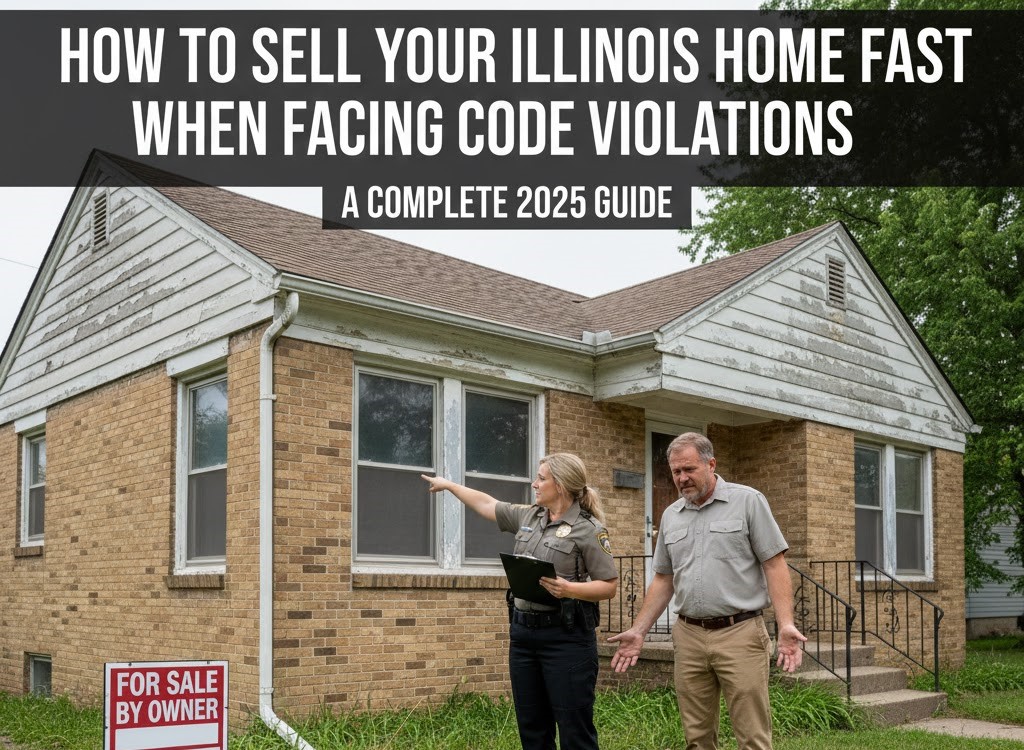
Selling a home is rarely simple, but selling a home with code violations in Illinois can feel especially overwhelming. Many homeowners receive a city notice, a failed inspection report, or a letter from the building department and suddenly feel stuck. Some don’t have the money to make repairs. Others don’t have the time. And many feel confused about whether it is even legal to sell a home with violations.
The truth is this: you can legally sell a house with code violations in Illinois, and thousands of homeowners do it every year. But your selling options will depend on the type of violations, the severity of the issues, and how quickly you need the property sold.
This detailed guide explains everything you need to know about selling a home with code violations, the risks of waiting too long, and the fastest way to get a reliable cash sale without fixing anything.
1. What Are Code Violations in Illinois?
In Illinois, code violations are issues that fail to meet local building, electrical, plumbing, zoning, or safety standards. Every city or county has its own code requirements, so the violation notice you receive depends on where the property is located. Cities like Aurora, Joliet, Lockport, Bolingbrook, Romeoville, and Minooka all enforce their codes differently all enforce their codes differently, but the most common violations are similar across the state.
Many homes receive violations for problems such as unsafe electrical wiring, outdated plumbing, leaking roofs, cracked foundations, deteriorated porches, missing railings, mold or water damage, and unpermitted construction. Homes that have been vacant for months or years often accumulate even more violations due to vandalism, weather damage, or neglect.
While some violations are simple to fix, others require expensive professional repairs. This makes many homeowners search for solutions like selling as-is, selling to a cash buyer, or avoiding repairs altogether.
2. What Happens After You Receive a Code Violation Notice?
Receiving a violation letter does not automatically stop you from selling your home, but it does trigger several steps that require attention. The city may give you a deadline to complete repairs. If those repairs are not finished in time, the city may issue daily fines. In more serious cases, the city may place a lien on the property. Some municipalities can even declare a property unsafe or uninhabitable, especially if issues involve structural problems, fire damage, or severe safety hazards.
Violations can also impact a real estate transaction. A home with unresolved issues may fail inspection when listed on the market. Traditional buyers often walk away from homes that cannot pass a standard home inspection. Even if a buyer wants the house, mortgage lenders may refuse to finance it because banks will not approve loans for unsafe or uninsurable properties.
This is why many homeowners look for alternatives such as selling to a cash buyer who can close without repairs or inspections.
3. Can You Sell a House With Code Violations in Illinois?
Yes, you absolutely can sell a house with code violations in Illinois. The law allows homeowners to sell properties in as-is condition as long as they disclose known issues honestly. This means you do not have to make repairs, fix structural problems, or bring the home up to current code standards before selling.
However, your selling method matters. You generally have three options:
Option 1: Repair the Violations Before Selling
This works best if the violations are minor. But if the repairs require permits, licensed contractors, or extensive work, the costs can quickly escalate. Many homeowners do not have the time or money to make repairs before listing.
Option 2: List the House As-Is with a Realtor
Listing as-is on the open market is possible, but it comes with challenges. Most retail buyers expect move-in-ready homes. When an inspection report lists multiple code violations, buyers often request repairs, price reductions, or they walk away entirely. This process can repeat itself multiple times, causing months of delays.
Option 3: Sell to a Local Illinois Cash Home Buyer
This is the fastest and most realistic option for people who want to avoid repairs. Cash buyers do not rely on mortgage loans. They do not require inspections or appraisals. They purchase homes exactly as they are, even if they have structural issues, violations, liens, or unpermitted additions. A cash buyer can take responsibility for the code violations after closing, which allows the seller to walk away without dealing with the city.
Most Illinois homeowners with code violations choose this third option because it avoids risk, saves time, and provides a guaranteed sale.
4. Why Homes With Code Violations Are Hard to Sell Traditionally
Traditional real estate transactions involve multiple layers of approval, and code violations can disrupt each one.
Mortgage lenders are usually the biggest barrier. If the home has electrical hazards, structural problems, broken plumbing, or safety issues, the lender will not approve the loan. Even small violations can cause big delays. Appraisers may also flag issues, requiring repairs before the loan can proceed.
Inspections create another major obstacle. Illinois inspectors are trained to identify even small violations. A house that is not up to code may receive a long list of recommended fixes. Buyers see this list and become nervous. Many cancel the contract or negotiate aggressively.
Even if a buyer remains interested, the timeline becomes long and unpredictable. Repairs must be completed. The city must re-inspect. The lender must re-approve. All of this can push closing dates far into the future.
This is why homeowners often search for alternatives like “sell my house fast Illinois” or “cash buyers for houses with violations Illinois.”
5. The True Cost of Fixing Code Violations in Illinois
Repair costs vary widely, but most violations are more expensive than expected. Fixing electrical problems often requires licensed electricians. Plumbing issues require permits. Structural repairs demand engineers or specialized contractors. Even a simple porch repair may need city approval.
Many Illinois homeowners face multiple violations at once, especially in older homes. Costs can easily reach thousands or tens of thousands of dollars. For landlords, inherited homeowners, or people facing financial hardships, investing this amount is not possible.
In these cases, selling the home as-is becomes the most practical choice.
6. How to Sell the Property As-Is With Code Violations
Selling as-is is simpler than most homeowners expect.
The first step is reviewing the violation notice and understanding what the city is requiring. This will help you decide if repairs are worthwhile—or if selling as-is is the better route.
Once you decide to sell, you must disclose known issues to the buyer. This is an Illinois requirement. After disclosure, you choose your selling path.
Homeowners who want to avoid repairs usually request a cash offer from a local buyer. Cash buyers evaluate the property based on its future potential, not its current condition. They estimate the after-repair value and offer a fair price considering the cost of repairs. They take over violations after closing, including handling the city directly.
This allows the seller to avoid fines, avoid re-inspections, and move forward quickly.
7. Why Cash Buyers Are the Easiest Way to Sell a Home With Violations
Cash buyers specialize in distressed properties. They buy homes that have failed inspection, been cited by the city, or are in need of major repairs. They buy houses that are vacant, abandoned, inherited, or occupied. They buy outdated homes, homes with unpermitted additions, and homes with liens.
Cash buyers purchase properties without requiring the seller to fix anything. They close fast, often in seven to fourteen days. They waive inspections, appraisals, and loan contingencies. This removes the uncertainty that homeowners face with traditional buyers.
Because cash buyers take full responsibility for repairs after closing, homeowners do not need to worry about city deadlines or accumulating fines.
8. Selling Vacant or Abandoned Homes With Code Violations
Vacant Illinois homes are especially vulnerable. When no one lives in a property, weather, pests, moisture, and vandalism cause rapid deterioration. Many cities closely monitor vacant homes and issue violations more frequently.
Absentee owners often struggle to manage repairs from a distance. For them, selling as-is to a local cash buyer is often the best solution. This prevents further damage, avoids fines, and eliminates ongoing maintenance issues.
9. What If Your Illinois Home Has a City Lien?
A lien does not prevent you from selling. In most cases, liens can be paid off at closing. Cash buyers frequently work with title companies to resolve liens quickly. This allows sellers to move on without paying out-of-pocket before the sale.
10. How Fast Can You Sell a Home With Code Violations?
Traditional sales take months because of inspections, repairs, lender requirements, and city paperwork.
Cash sales can close in a week or two. The process is simple, predictable, and requires no repairs. This is why many homeowners choose cash buyers when facing violations or deadlines.
11. Should You Repair Violations or Sell As-Is?
Repairing violations is worthwhile only if the issues are small and inexpensive. Sellers who want maximum price and have the money, time, and energy to manage repairs may choose this route.
However, selling as-is is a better choice if the house is older, repairs are expensive, the seller is short on time, or the property is already distressed. Selling as-is avoids the complexity of permits, contractors, city inspections, and unexpected repair issues.
12. Final Thoughts: You Can Sell Your Illinois Home Even With Code Violations
Code violations can feel intimidating, but they do not prevent you from selling your house. You have options. You can fix the violations, list the home as-is, or sell directly to a cash buyer who will purchase the property in any condition.
Selling as-is to a local Illinois cash home buyer is often the fastest and most reliable solution. You avoid repairs, inspections, delays, and city re-inspections. You avoid paying contractors, filing permits, or dealing with fines. You walk away from the property on your timeline with no stress