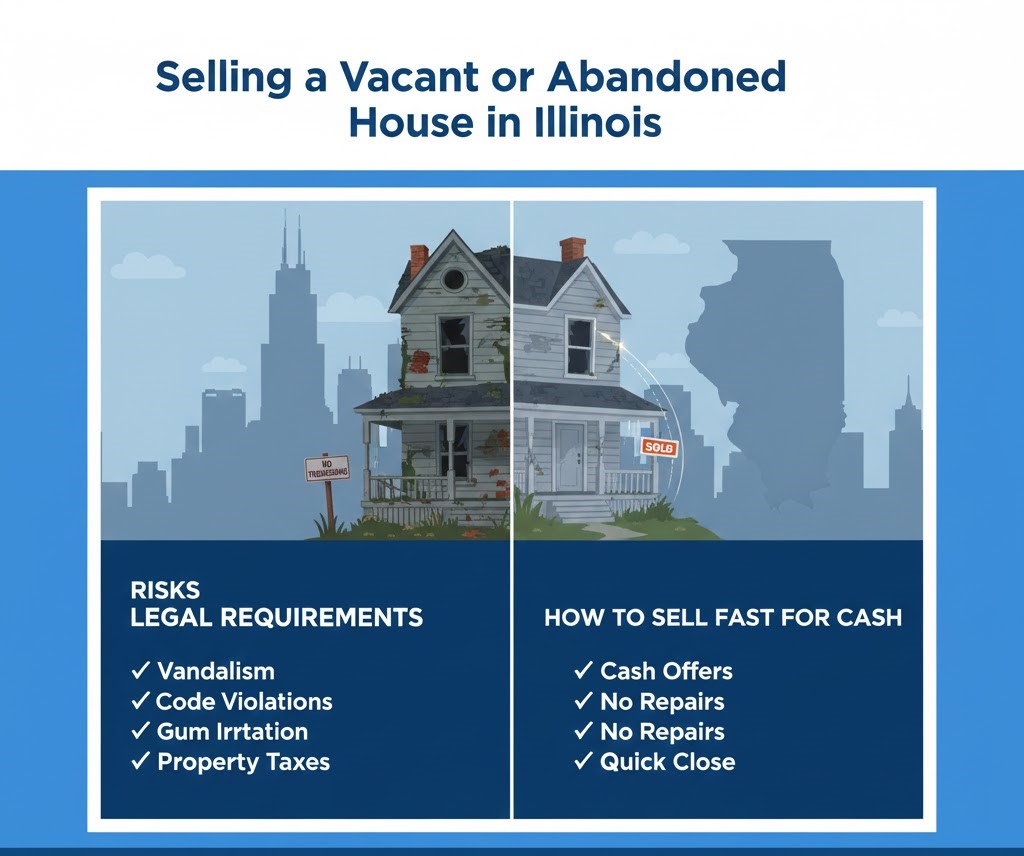
Vacant and abandoned houses are more common in Illinois than many people realize. Whether the property was left empty after a move, inherited unexpectedly, stuck in probate, or simply neglected over the years, dealing with an unoccupied home can quickly become a burden for owners and families.
Vacant homes attract maintenance issues, unwanted visitors, city violations, and growing financial costs. Many Illinois homeowners decide that selling the property quickly, in its current condition, is the safest and most practical solution. But selling a vacant or abandoned house is not the same as selling a regular, lived-in property. There are legal requirements, insurance concerns, risks, and procedural steps that every seller should understand.
This guide breaks down everything you need to know about selling a vacant or abandoned home in Illinois — including risks, local laws, required disclosures, and your options for selling quickly, especially if the house needs repairs or is not market-ready.
1. What Is Considered a Vacant or Abandoned Property in Illinois?
A property is considered vacant when it is unoccupied for an extended period. A home becomes abandoned when the owner stops maintaining it, paying taxes, or taking responsibility for the property.
Common situations that lead to vacancy include:
- Owner moved out and never moved back
- Divorce or separation
- The home is stuck in probate
- Owners relocated for work
- Structural issues or costly repairs
- Inherited property left untouched
- Foreclosure or pre-foreclosure
- Tenant eviction
- Property left unfinished
An abandoned property typically shows signs such as peeling paint, broken windows, no utilities, unpaid taxes, or overgrown yards. In Illinois, these conditions can trigger city fines or code violations.
2. Risks of Leaving a House Vacant in Illinois
Vacant homes pose several financial and safety risks — which is why many homeowners choose to sell quickly instead of maintaining the property.
2.1 Burglary and Vandalism
Vacant houses attract break-ins, theft of appliances, illegal dumping, and vandalism. Some homeowners return to find copper pipes removed or major damage inside.
2.2 Squatters
Illinois has strict laws surrounding occupancy rights. If unauthorized individuals enter the property and stay long enough, removing them can require a formal eviction.
2.3 Weather Damage
Extreme Illinois winters and humid summers can cause:
- Burst pipes
- Mold growth
- Roof leaks
- Frozen plumbing
- Foundation damage
Small unnoticed issues in a vacant home can become major repairs.
2.4 City Violations and Fines
Many Illinois cities issue citations for:
- Tall grass or weeds
- Broken windows
- Unsafe structures
- Trash buildup
- Unregistered vacant buildings
These fines accumulate quickly and may become liens against the property.
2.5 Insurance Problems
Standard homeowner insurance does not cover long-term vacancy. If the insurer discovers the home has been empty for more than 30–60 days, the policy may be void, leaving the home uninsured.
2.6 Lower Property Value
Vacant homes tend to deteriorate faster, making them harder to sell on the traditional market.
3. Legal Requirements for Vacant Houses in Illinois
Before listing or selling a vacant or abandoned property, it’s important to understand Illinois laws.
3.1 Local Vacant Property Registration
Many Illinois municipalities, such as Chicago, Rockford, Joliet, Aurora, and Springfield, require owners to register vacant properties and pay yearly fees. Failure to do so can result in fines or liens.
3.2 Required Disclosures
Illinois law requires sellers to disclose known material defects, even for vacant homes. However, if you have never lived in the property or know very little about its condition, you may qualify for certain exemptions. Cash buyers often purchase without requiring extensive disclosures.
3.3 Liens and Delinquent Taxes
Unpaid taxes, utility bills, or city fees must be paid during closing. The title company verifies and clears these items from the sale proceeds.
3.4 HOA or Community Guidelines
If the home is part of an HOA, rules regarding vacant properties may apply, including maintenance standards or fines.
4. Should You Repair a Vacant House Before Selling?
Many Illinois homeowners wonder if they should repair a vacant property before selling it. The answer depends on your goals, budget, and timeline.
4.1 When Repairs Make Sense
Repairs may be worth it if:
- The home is in a highly desirable neighborhood
- The repairs are minor
- You plan to list with a real estate agent
4.2 When Selling As-Is Is a Better Choice
Selling as-is is usually the best option for:
- Homes with extensive damage
- Homes vacant for long periods
- Abandoned or distressed properties
- Owners who live out of state
- Homes with mold, roof issues, or structural damage
- Properties with multiple liens or city violations
Most traditional buyers want a move-in-ready property. Vacant homes rarely meet those expectations, leading to issues with inspections, appraisals, or financing.
5. How to Prepare a Vacant House for Sale in Illinois
Even if you are selling as-is, there are a few steps that can make the process smoother.
5.1 Secure the Property
Lock all doors and windows. If necessary, install temporary security devices.
5.2 Stop Deterioration
Even minimal maintenance helps reduce long-term damage:
- Keep grass trimmed
- Patch broken windows
- Turn off water to prevent leaks
- Winterize plumbing
5.3 Remove Hazardous Items
Remove debris, chemicals, or items that could be unsafe.
5.4 Document the Condition
Take photos and notes. This is useful for:
- Disclosures
- Insurance
- Pricing
- Negotiations
6. Selling a Vacant or Abandoned Home: Your Options
There are two main methods homeowners use to sell vacant properties in Illinois.
Option 1: Listing on the Traditional Market
This approach works best if the home:
- Is in good condition
- Needs minimal repairs
- Has no major violations
- Is in a highly demanded suburb or neighborhood
However, vacant properties often don’t perform well on the MLS because:
- Traditional buyers want turnkey homes
- Inspections uncover issues
- Appraisal value may fall short
- Financing delays push out the closing
- The home may sit for 60–120 days
Vacant properties tend to highlight flaws more than occupied ones, discouraging many traditional buyers.
Option 2: Selling to a Local Illinois Cash Buyer
This option is increasingly popular for vacant and abandoned homes.
Advantages include:
- No repairs or cleaning
- No showings or open houses
- No agent commissions
- Fast closing (as soon as 14 days depending on title)
- Ability to sell with violations, liens, or unpaid taxes
- Cash simplifies closing
- Remote closing available for out-of-state owners
Investors and cash buyers are more comfortable purchasing homes with:
- Roof damage
- Mold
- Structural concerns
- Fire or water damage
- Old systems
- Vacant or abandoned status
For many sellers, the certainty and speed of a cash sale make it the easiest option.
7. How Local Illinois Cash Buyers Evaluate Vacant Homes
Cash buyers typically look at:
- Current as-is condition
- Repair costs
- Neighborhood demand
- Comparable sales
- Title or legal issues
- Condition of mechanical systems
- Age of roof, windows, furnace, and plumbing
This evaluation helps produce a fair as-is cash offer without requiring you to fix anything.
8. Common Challenges (and How to Avoid Them)
8.1 Unknown Property Condition
Solution: Sell as-is to avoid inspection surprises.
8.2 Break-ins or Damage
Solution: Secure the home early.
8.3 Liens or Taxes
Solution: Let the title company resolve them during closing.
8.4 Multiple Owners or Heirs
Solution: Cash buyers and title companies can pay each heir directly.
8.5 Out-of-State Ownership
Solution: Use remote closing; no travel necessary.
9. Financial Considerations When Selling a Vacant House
Vacant properties often come with hidden costs:
- Utilities
- Taxes
- Insurance
- HOA fees
- Violations
- Maintenance
- Mortgage payments
Selling quickly helps stop these costs from increasing.
10. Why So Many Illinois Homeowners Choose to Sell Vacant Homes for Cash
Selling on the MLS requires time, money, and repairs — things most vacant properties lack. Cash sales offer:
- Speed
- Simplicity
- Certainty
- Safety
- No out-of-pocket expenses
You walk away without having to worry about cleaning, repairing, or maintaining a home that is already causing stress.
11. Final Thoughts
Vacant and abandoned homes in Illinois can quickly turn from an asset into a liability. Whether the property has been empty for months or years, selling the home quickly — and often as-is — is usually the smartest financial and practical decision.
Understanding the risks, legal requirements, maintenance needs, and sale options can help you make an informed choice. For many owners, especially those managing an older home, an inherited house, or a neglected rental, selling to a reliable local cash home buyer offers the fastest and least stressful path forward.
With the right approach, you can protect your finances, avoid ongoing maintenance issues, resolve liens, and close on a timeline that works for you.